
If you brush your teeth twice a day and assume that’s enough, you’re certainly not alone. It’s the routine most of us learn as children – but brushing is only part of the picture.
Your toothbrush cleans the front, back, and chewing surfaces of your teeth, but it cannot always reach the tight spaces between them. That’s where flossing comes in.
At Melton Dental House, flossing is one of the most common gaps – pun intended – we see in people’s oral health routines. It’s rarely because someone doesn’t care for their teeth. Flossing simply isn’t as firmly embedded in our daily habits as brushing.
The good news is that it only takes a few minutes, costs very little, and can make a meaningful difference to the health of your teeth and gums.
Why Is Flossing So Important?
Food particles and plaque can collect between your teeth throughout the day. If they aren’t removed, the bacteria in plaque feed on sugars and produce acids that can gradually weaken tooth enamel and contribute to decay.
Plaque can also irritate the gums, causing them to become red, swollen, or prone to bleeding. If this continues, it may contribute to gum disease.
Flossing helps by removing plaque and food debris from areas your toothbrush may not reach. It isn’t a replacement for brushing or professional dental care, but it is an important part of a complete oral hygiene routine.
How Flossing Helps Your Gums
Healthy gums help protect and support your teeth. However, plaque commonly accumulates along the gumline and between teeth, including areas that can be difficult to clean effectively with a toothbrush alone.
Flossing gently below the gumline helps disrupt this plaque before it has the opportunity to cause ongoing irritation.
If you are new to flossing, you may notice some mild bleeding at first. This can happen when the gums are inflamed or adjusting to being cleaned regularly. However, bleeding that continues, occurs frequently or is accompanied by swelling, tenderness or bad breath should be checked by your dentist.
Which Type of Floss Should You Use?
Walk down the oral care aisle and you’ll find plenty of choices. The best option usually depends on the spacing between your teeth, any dental work you have and what you feel comfortable using consistently.
- Floss tape is wider and flatter than traditional floss. Many people find it comfortable and easy to guide between their teeth.
- Standard floss is thin, strong and widely available. It can work well for teeth with tighter contact points.
- Interdental brushes are small brushes designed to clean between teeth. They can be particularly helpful for larger spaces, bridges or certain types of dental work.
- Floss picks have a short piece of floss attached to a handle. Some people find them easier to control, particularly when cleaning the back teeth.
- Water flossers use a stream of water to clean around the teeth and gumline. They may be useful for people with braces, implants or dental work that makes string floss difficult to use.
There isn’t one option that suits everyone. The most effective tool is usually the one you can use correctly and consistently. Your dentist or oral health therapist can recommend the best option for your individual needs.
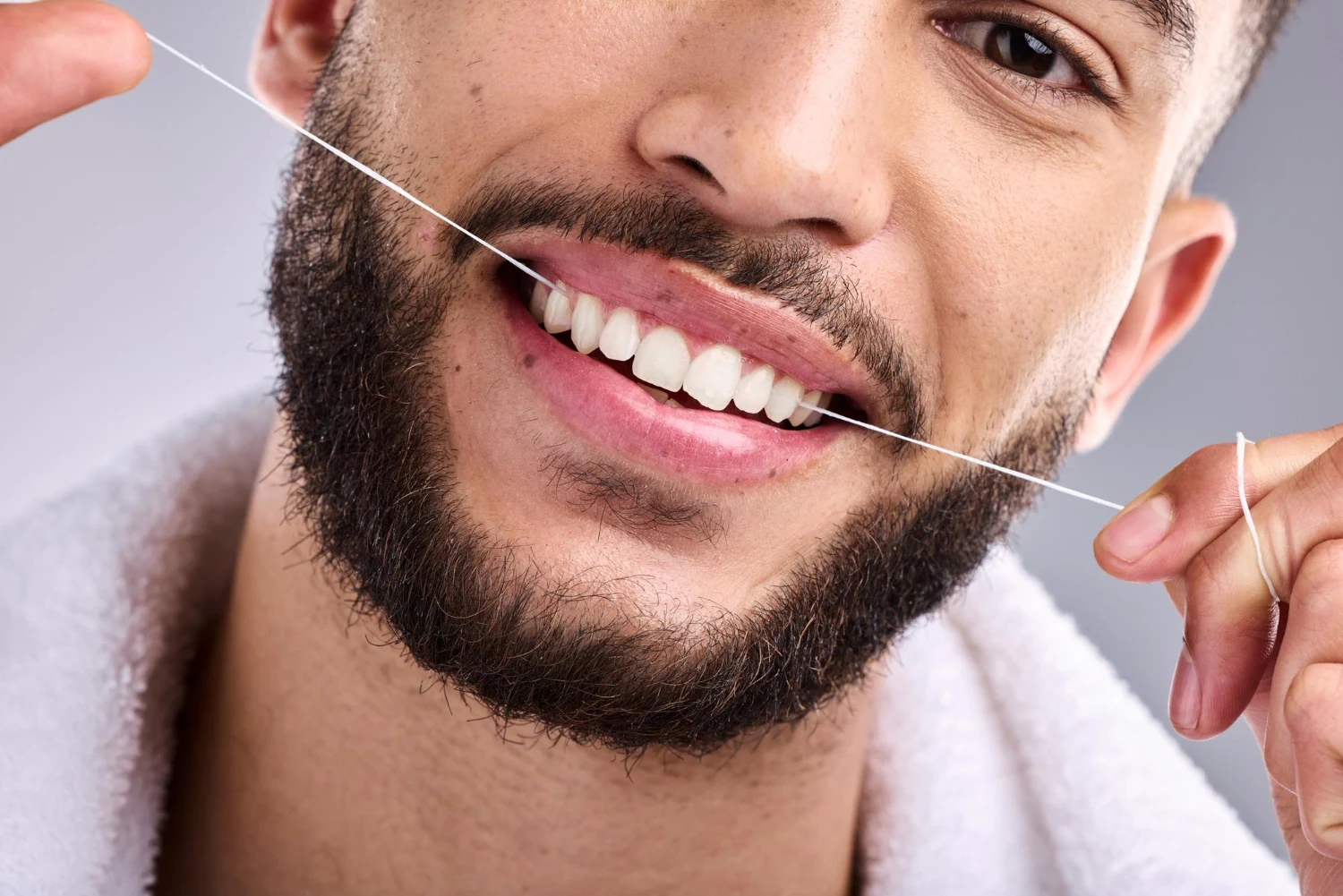
How to Floss Properly
Good technique makes flossing more comfortable and effective.
- Break off approximately 45 centimetres of floss and wind most of it around your middle fingers, leaving a short section between them.
- Hold the floss firmly between your thumbs and index fingers.
- Gently guide it between two teeth using a slow back-and-forth motion. Avoid snapping it down onto the gums.
- Curve the floss around the side of one tooth to form a C-shape.
- Slide it gently up and down the tooth surface, moving slightly beneath the gumline.
- Repeat the same motion against the neighbouring tooth before removing the floss.
- Move to a clean section of floss as you continue around your mouth.
- Remember to clean behind your very back teeth as well.
Flossing should feel gentle and controlled. You don’t need to press hard or move quickly – thorough technique is much more important than force.
When Is the Best Time to Floss?
Aim to clean between your teeth once a day. The exact time matters less than choosing a time you can stick to consistently.
Many people prefer to floss at night so they can remove plaque and food debris that have collected throughout the day. Flossing before brushing may also help loosen debris, allowing it to be brushed away afterward.
The key is to make flossing part of an existing routine. Keeping your floss beside your toothbrush can be a simple but effective reminder.
Common Flossing Mistakes
Even with the best intentions, a few habits can make flossing less effective.
Flossing too aggressively
Flossing should not hurt. Snapping the floss into your gums or using too much pressure can cause soreness and irritation.
Moving the floss straight up and down
Simply sliding floss into the gap may miss plaque along the sides of the teeth. Remember to wrap it into a C-shape and clean both teeth in each space.
Skipping the back teeth
They can be harder to reach, but the back teeth are just as vulnerable to plaque, decay, and gum problems.
Flossing only occasionally
Flossing immediately before a dental appointment won’t make up for weeks of missed cleaning. It works best when it becomes part of your everyday routine.
Using the same section throughout your mouth
Move to a clean section of floss as you go so you are removing plaque rather than transferring it from one space to another.
When Should You See a Dentist?
Flossing and brushing are the foundations of good oral hygiene, but they work best alongside regular dental examinations and professional cleans.
Book an appointment if you notice:
- Gums that bleed regularly
- Red, swollen or tender gums
- Persistent bad breath
- Pain or sensitivity between your teeth
- Gums that appear to be pulling away from your teeth
- Loose teeth or changes in the spaces between them
- Floss that repeatedly catches, shreds, or breaks in the same area
These symptoms may indicate decay, gum disease, a rough filling, or another issue that needs professional attention.
A Small Habit with a Lasting Benefit
Flossing may feel like a minor addition to your day, but it is one of the simplest ways to care for your teeth and gums between dental visits.
Combined with brushing twice a day and attending regular check-ups, daily flossing can help reduce plaque, protect your gums, and prevent smaller concerns from becoming more complicated.
If it has been a while since your last visit – or you would like some hands-on guidance with your flossing technique – the friendly team at Melton Dental House is here to help. We can recommend suitable products and show you the most effective way to clean between your teeth based on your individual needs.