


Missing teeth are more common than most people think. Australian adults aged 15 years and over had an average of 5.7 missing teeth, according to the Australian Institute of Health and Welfare. So if you’re weighing up teeth bridge price against the cost of an implant bridge, you’re in good company, and you’re asking the right question before you commit to anything.
The trouble is, “how much does it cost” doesn’t have one simple answer. A bridge for one missing tooth is a very different job to an implant bridge replacing four teeth in a row. Materials change the price. Bone health changes the price. Even where you live can nudge the number up or down.
This guide walks through what actually drives the cost of each option, so you can go into your consultation asking the right questions instead of just hoping for the best.
Dental Implants vs Dental Bridge: What’s the Difference Beyond Price?
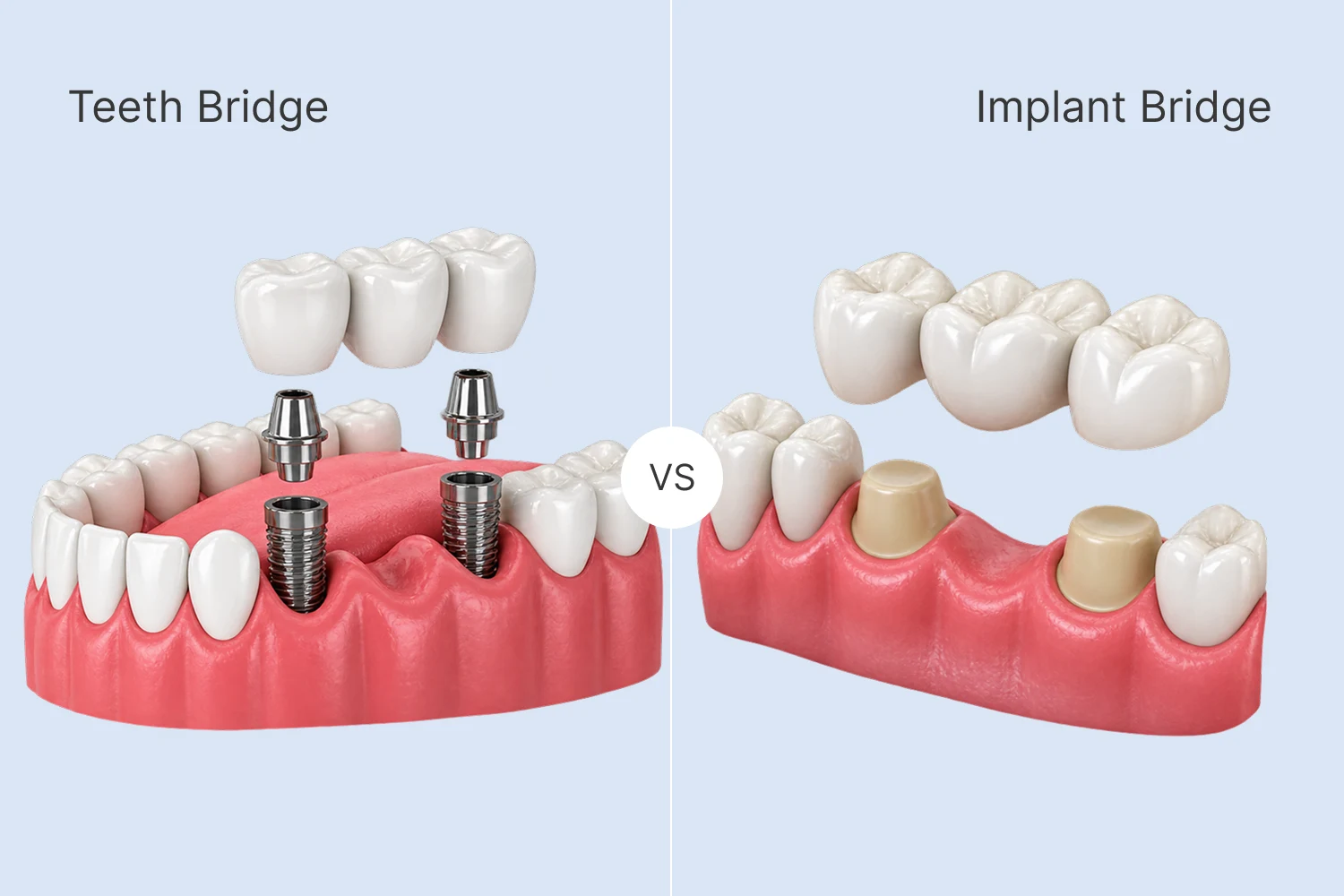
When comparing dental implants vs dental bridges, it is helpful to understand how the two options differ. The dental bridge uses the neighbouring teeth to support false teeth, while the dental implant replaces the root of the missing tooth with a titanium post that becomes fused with the jawbone. These differences can affect treatment time, overall cost, and how the surrounding teeth and jawbone are managed. Dental implants can help maintain bone in the area of the implant, although the suitability and expected outcome vary between patients.
No option could be regarded as the absolute best. A dental bridge may be an appropriate option in some cases, particularly when the neighbouring teeth would otherwise require restoration. Your dentist can assess whether this approach is suitable for you. A dental implant may be a better fit if preserving your healthy neighbouring teeth is the priority. The following paragraphs will describe the reasons for the financial differences between these treatment options.
What’s the Real Difference in Price Between a Bridge and an Implant Bridge?
The cost of conventional bridges in Australia lies between $2,000 and $5,500 for a normal bridge, varying according to the number of teeth being replaced, the type of bridge and the materials used. The cost of implant-supported bridges is much higher because of the surgery needed and because the treatment takes more time than the traditional one. Although implant treatment may have a higher initial cost, the overall treatment plan and long-term maintenance requirements vary between patients.
That price difference isn’t random. A regular bridge uses your existing teeth as anchors. An implant bridge replaces the roots themselves with titanium posts, which is a bigger, more technical job. More on why that matters for your bone and your budget below.
Factors That Affect the Cost of a Traditional Bridge
There are various factors that affect tooth bridge cost. The material is the one that plays an important role when it comes to pricing. The material selected for the bridge can affect the overall cost. Common materials include porcelain-fused-to-metal, all-ceramic, and zirconia, with pricing varying according to the material, design and laboratory used. The number of teeth involved is another aspect that affects pricing. A person with only one lost tooth may only need a three-unit bridge, which typically consists of two supporting crowns and one replacement tooth, called a pontic. For patients who are missing multiple teeth, a more extensive bridge may be considered to restore function and appearance. If the supporting teeth require additional treatment, such as a filling or root canal treatment, this may also form part of the overall treatment plan and cost.
At Melton Dental House, our dental crown and bridge team walks you through these factors during your assessment, so there are no surprises once treatment starts.
What Determines the Cost of an Implant Bridge?
An implant bridge usually costs more because it needs surgically placed implants, not just crowns fitted over your existing teeth. Depending on the number and position of missing teeth, an implant-supported bridge may be supported by more than one implant. The number of implants required is determined during treatment planning based on factors such as bone volume, spacing and the design of the final restoration. If additional procedures such as bone grafting are required, these may increase the overall cost. The additional cost varies depending on the type and extent of treatment required.
The final bridge material plays a part here too, along with how many implants your dentist recommends. That number depends on your bone quality and the size of the gap, which is why implant bridge quotes vary so much from person to person. During assessment, your dentist checks bone density and spacing before recommending a plan, since every case is different and results can vary from patient to patient.
If you’re missing several teeth in a row, our implant bridge page has more detail on how the treatment works from assessment through to the final bridge.
Is a Bridge or an Implant Cheaper in the Long Run?
A bridge typically lasts between 10 and 15 years, and implants last much longer- decades if properly maintained. Thus, a bridge that needs replacement approximately every 15 years may end up costing you around $8,000 to $20,000 throughout your life, even though the initial cost appears low. Long-term studies on implant survival, including data published in the Journal of Dentistry, report survival rates around 94% at the 15-year mark — well beyond the typical 10–15 year lifespan of a conventional bridge
There’s no doubt that the cost of the bridge doesn’t tell the full story. A cheaper bridge may require one more successive replacement bridge down the line. Although an implant may have a higher initial cost, its long-term value depends on the individual’s clinical circumstances, maintenance needs, and future treatment requirements. However, one should keep in mind that there’s no guarantee involved. Every person has a unique problem, and the timing of services can vary depending on the person.
Insurance and Payment Options for Bridges and Implants
Medicare doesn’t cover dental bridges or implants for most adults, so this is generally a private health insurance question. Bridges and implants both usually fall under “major dental” extras cover, which comes with a waiting period of around 12 months for new policies or upgrades.
Rebates for a three-unit bridge often land somewhere between $1,000 and $2,000, depending on your fund and level of cover. Implant rebates work a bit differently, since the implant, the connector, and the crown are billed as separate items, and your annual limit might only stretch to part of the total. It’s worth ringing your fund before you book anything, so you know roughly what’s coming out of your own pocket.
If insurance doesn’t cover the full gap, flexible payment plans (including Afterpay and TLC) can help with the cost without putting treatment off.
How Do You Know Which Option Is Right for You?
When it comes to picking the right option for tooth replacement, there are a few things that tend to come into play, such as the number of missing teeth, whether the jawbone is healthy, the condition of the remaining teeth, and other constraints like budget as well as time. The most suitable tooth replacement option depends on factors such as the number and location of missing teeth, the condition of the surrounding teeth, and the amount of available bone. If you’ve only got one gap to fill, a single dental implant might be a simpler and more cost-effective fit than a full bridge. And in some cases, if the tooth needs to come out anyway, immediate implants placed straight after extraction can shorten the whole process, though this depends on individual assessment.
There’s no single right answer here. Because treatment requirements vary, an examination and personalised treatment plan are the best way to understand the expected cost of your individual treatment.
The Bottom Line
Generally, the normal bridge would turn out to be more cost-effective compared to the implant bridge, but it is not likely to prove cheap throughout your lifetime because several things play a part in determining the overall cost. The kind of material used, the number of teeth involved, bone condition, and insurance are just some of the many factors that determine the cost.
The most reliable next step is to talk, not guess. At Melton Dental House, we will evaluate your teeth, explain your options, and give you the right quote based on exactly what you need. Book a consultation, and we’ll help you work out what makes sense for your smile and your budget.
Frequently Asked Questions
How much does a single tooth bridge cost in Australia?
A single tooth bridge cost starts at $2,000 and ends at $5,500, based on the material used and the state of your teeth next to the gap.
How much would an implant bridge cost for 3 missing teeth?
An implant bridge for replacing three adjacent teeth will cost $5,000-$15,000. The reason for that is that more than one implant is required, not one for each missing tooth.
Is the dental bridge or implant procedure cost paid for by my health insurance?
The majority of insurance companies treat dental bridges and dental implants as a “major dental” procedure under extras cover. As a result, the reimbursement usually ranges between $1,000 and $2,500. In most cases, the waiting period is around 12 months for each newly acquired or improved policy.
How long do dental bridges and implant bridges last?
Dental bridges last for 10 to 15 years on average, before requiring replacement or restoration. Dental implants are known to last for several decades, as research shows that the success rate after 15 years of operation is 94%.
Can I get a payment plan for a dental bridge or implant bridge?
Yes. Melton Dental House offers flexible payment options, including Afterpay and TLC, so you can spread the cost of treatment rather than paying it all upfront.