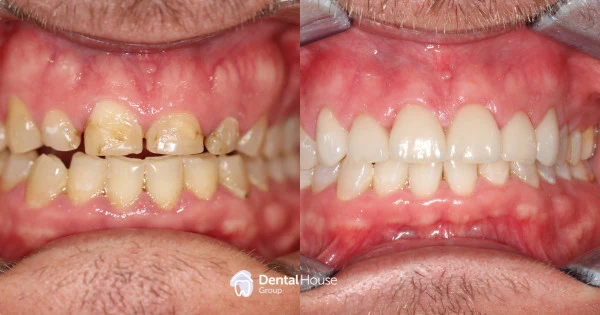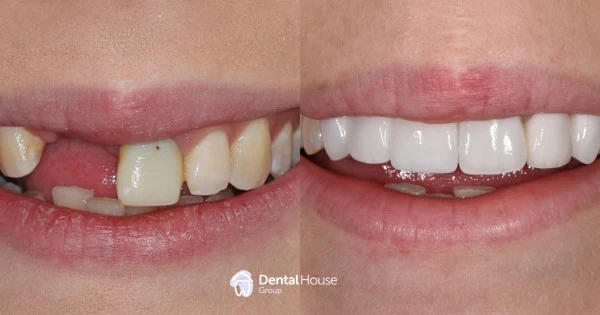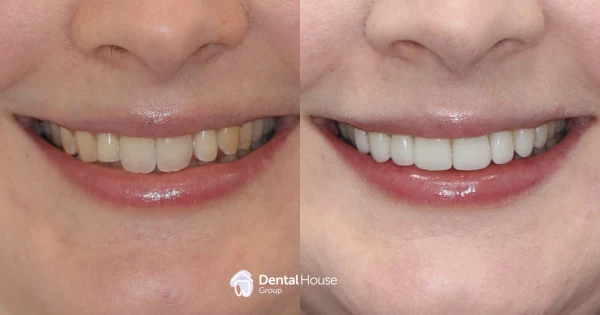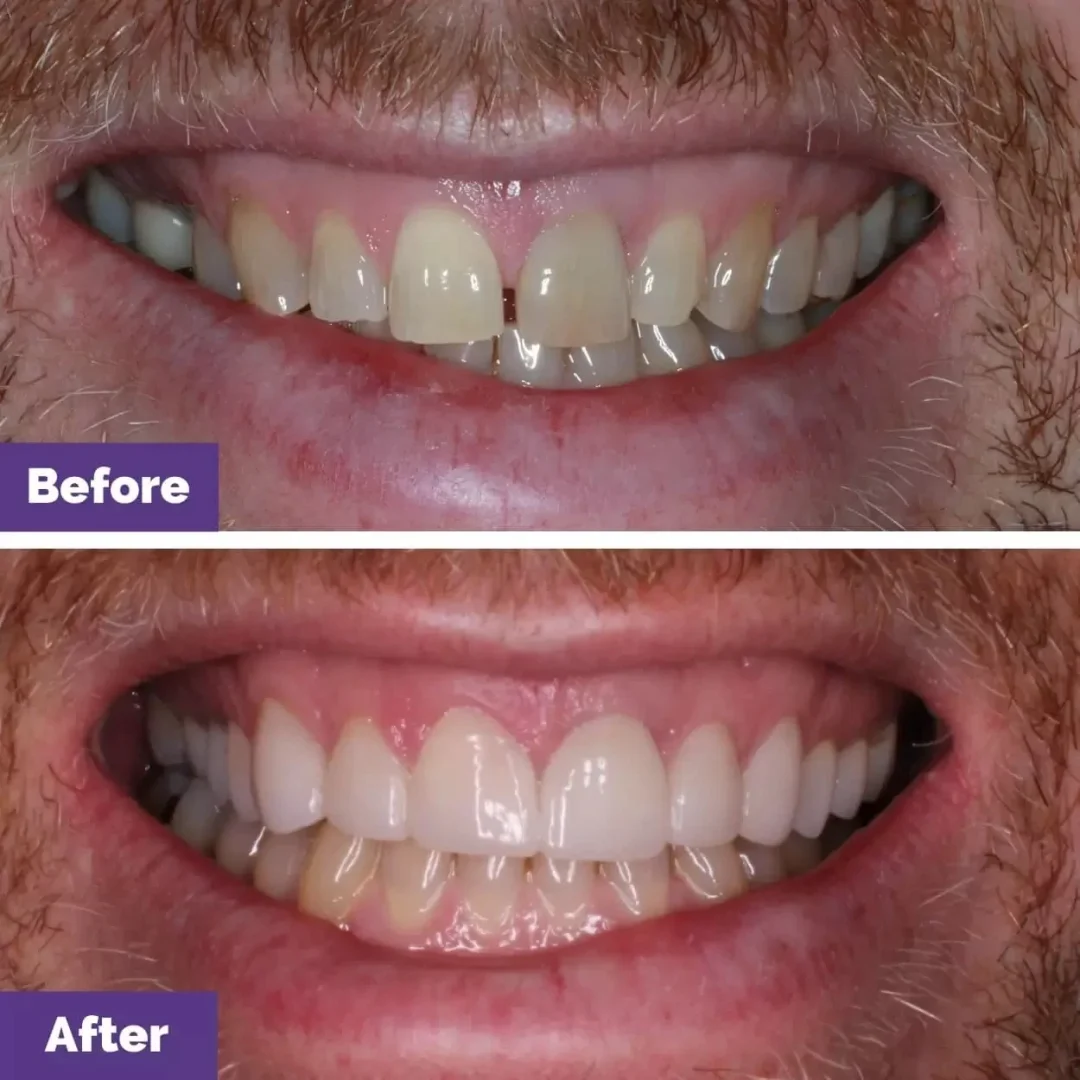
Case Note ID: Dec-2024-IB
Location: Melton Dental House (serving Melton, Rockbank, Kurunjang and surrounding areas)
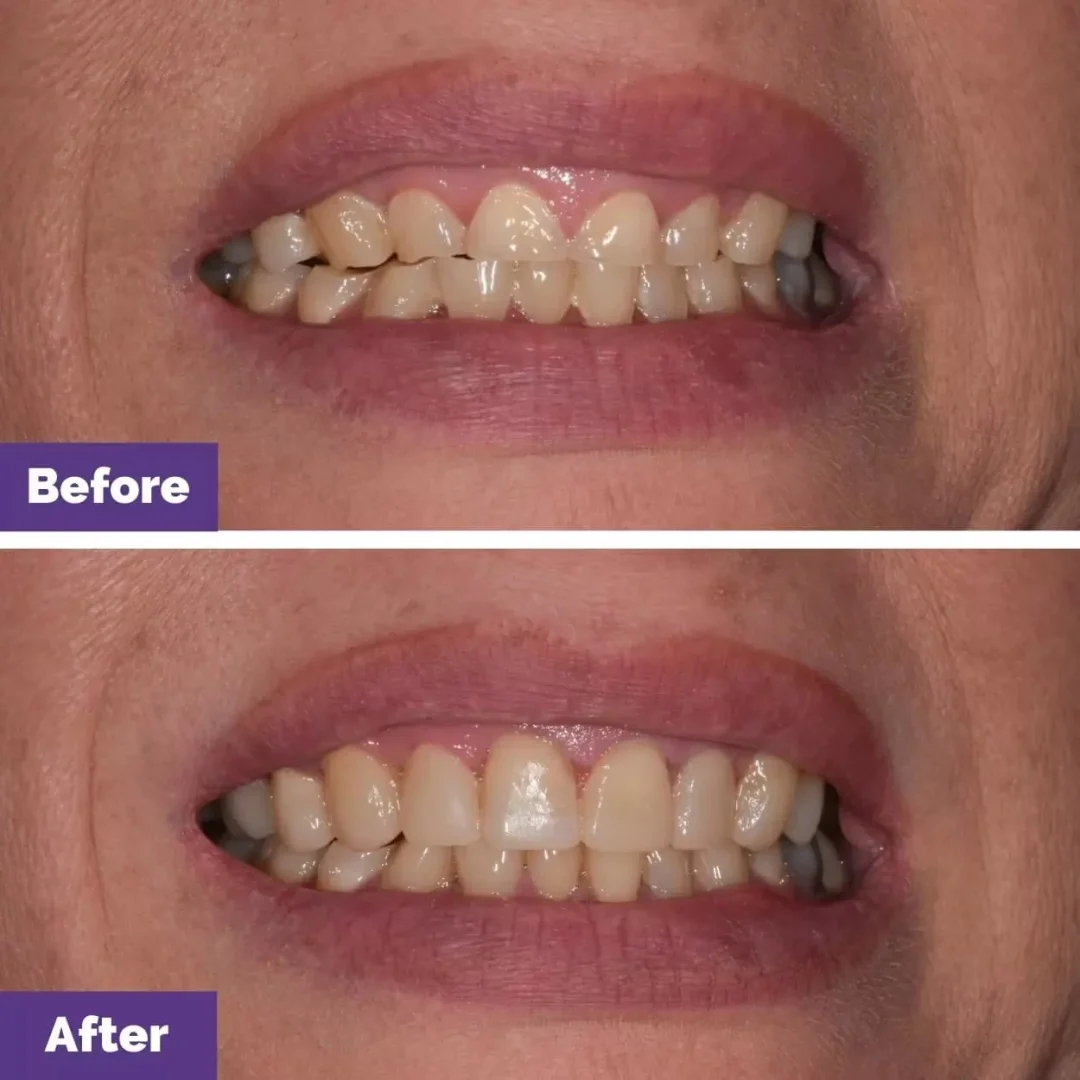
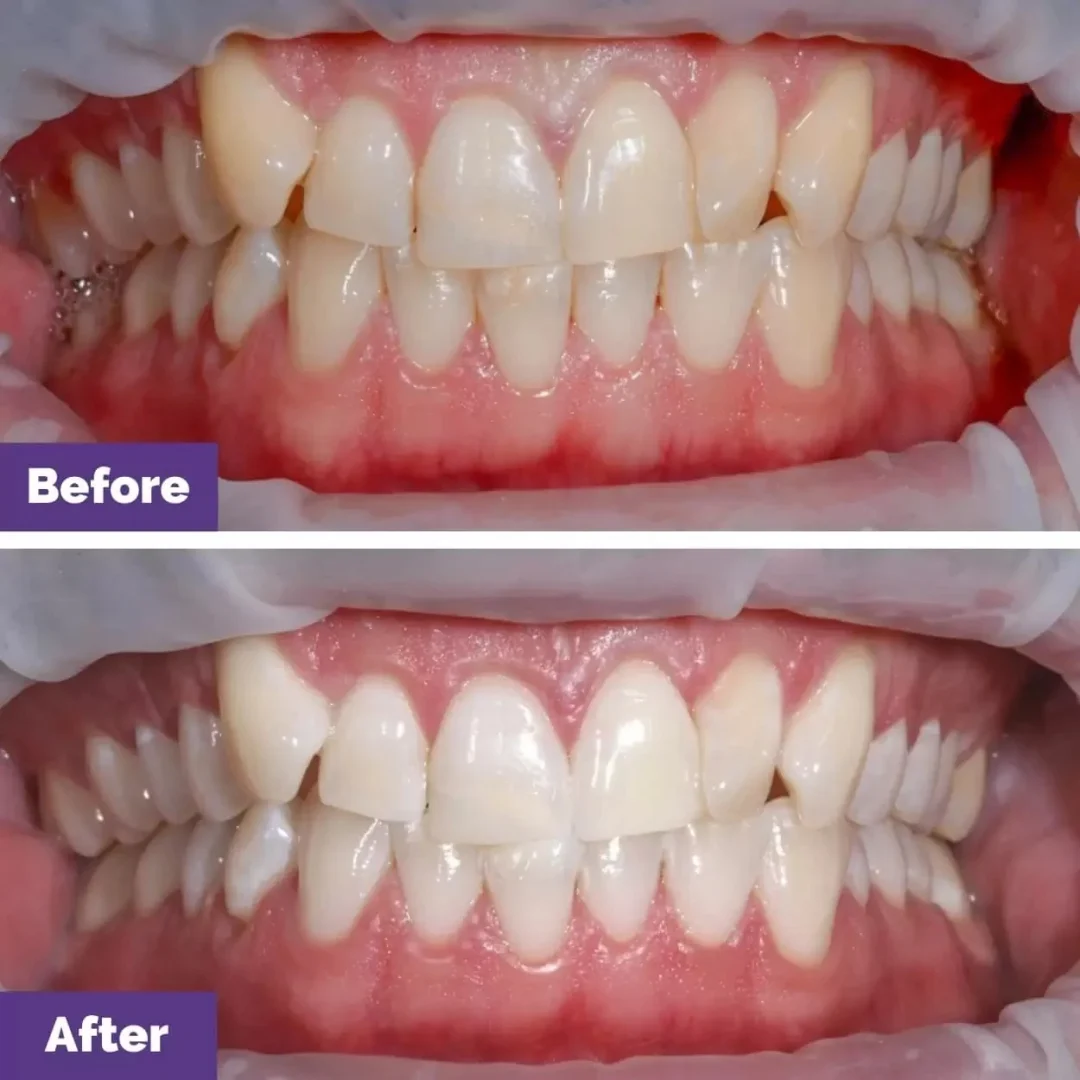
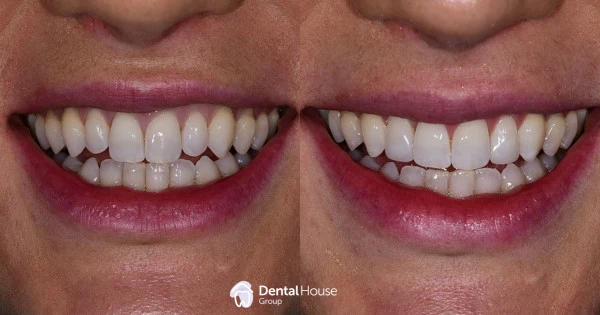
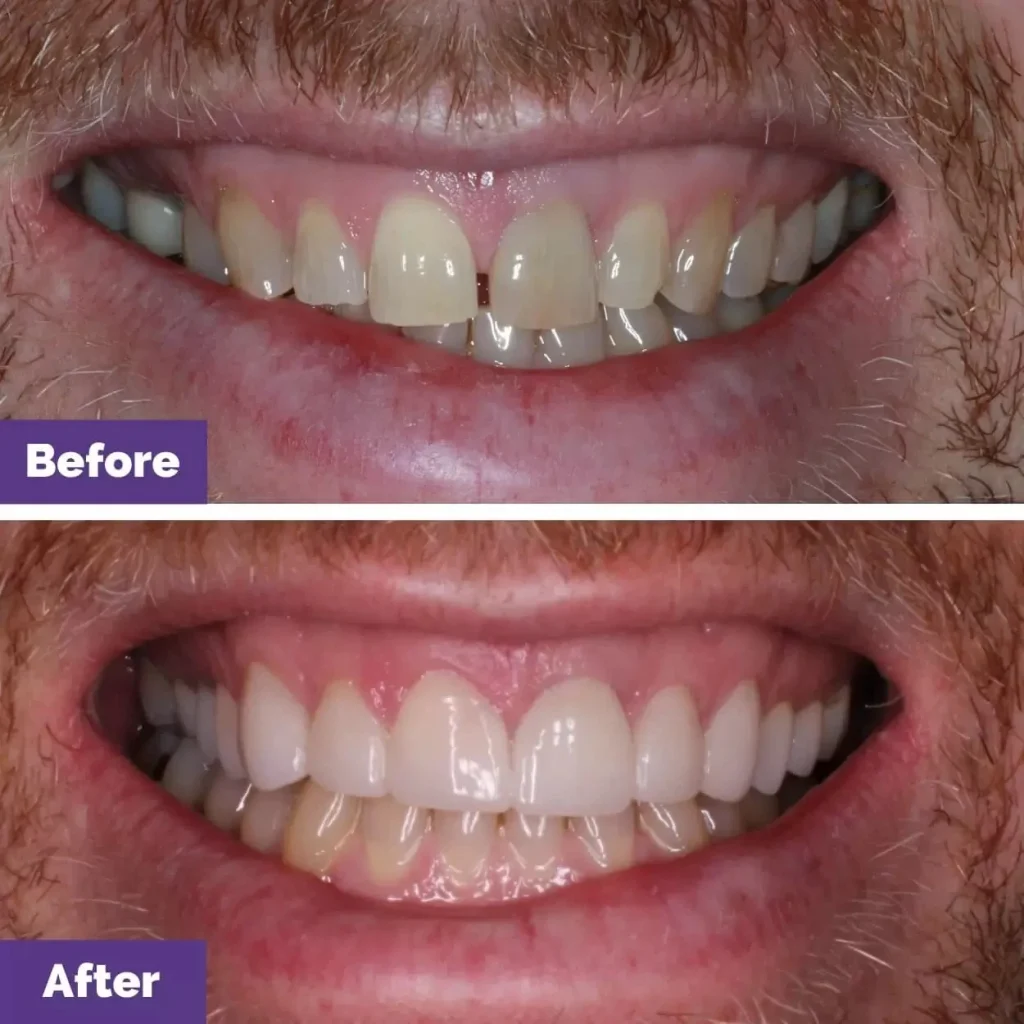
Primary Treatments: Internal bleaching for endodontically treated tooth
Supporting Technology: Walking bleach technique, sodium perborate application
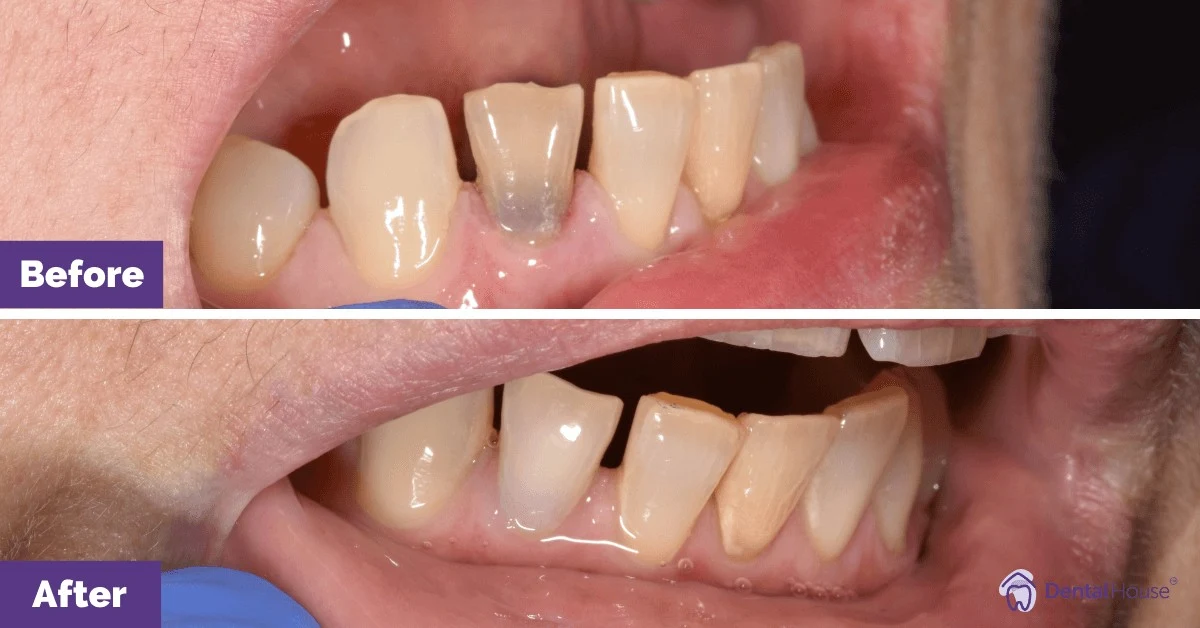
- Discolouration of root canal treated anterior tooth
- Progressive darkening affecting aesthetic appearance
- Patient concerns regarding single tooth standing out from adjacent teeth
- Assessment of crown integrity and endodontic seal quality
- Primary objective: Improve tooth colour whilst maintaining structural integrity
Phase 1: Assessment and Suitability Evaluation
- Radiographic examination to confirm adequate endodontic obturation
- Evaluation of existing restoration and tooth structure integrity
- Assessment of discolouration severity and likely bleaching response
- Discussion of internal bleaching process, alternatives and limitations
- Confirmation of adequate coronal seal to prevent bleaching agent leakage
Phase 2: Internal Bleaching Procedure
- Access cavity preparation through lingual or palatal surface
- Removal of gutta percha to appropriate level below gingival margin
- Placement of protective barrier over root canal filling
- Application of bleaching agent (typically sodium perborate paste)
- Temporary seal placement to contain bleaching material
- Multiple appointments may be required depending on discolouration severity
Phase 3: Monitoring and Final Restoration
- Assessment of colour change at follow-up appointments (typically 3-7 days intervals)
- Repeat bleaching applications if further improvement possible
- Final restoration placement once desired shade achieved
- Post-treatment monitoring for colour stability and complications
The internal bleaching approach involved placing oxidising agents within the tooth structure to address discolouration following root canal treatment. The walking bleach technique allows gradual colour improvement over multiple appointments, with shade change dependent on discolouration cause and tissue response.
Individual responses to internal bleaching vary significantly. Treatment outcomes cannot be guaranteed. Some teeth respond minimally despite multiple bleaching cycles, whilst others achieve substantial improvement. Colour relapse can occur months to years after treatment, potentially requiring repeat bleaching. External cervical resorption is a recognised complication that can occur following internal bleaching, though incidence rates are low. Not all discolouration types respond equally to bleaching.
How long does internal bleaching take to show results?
Colour improvement typically becomes noticeable within 3-7 days following initial bleaching agent placement. Multiple appointments (typically 2-4 sessions) are often required to achieve optimal results. Treatment duration varies based on discolouration severity and individual tooth response. Some cases require extended treatment periods beyond initial estimates.
Will the whitening result last permanently?
Internal bleaching results are not permanent. Colour relapse can occur over time, ranging from months to several years. Factors affecting longevity include original discolouration cause, oral hygiene and dietary habits. Some teeth require periodic re-treatment to maintain improved appearance. Complete colour stability cannot be guaranteed long-term.
What are the risks of internal bleaching?
External cervical resorption is a recognised complication where tooth structure is progressively lost, potentially requiring extraction. Whilst relatively uncommon, this risk should be understood. Other potential complications include bleaching agent leakage causing soft tissue irritation, inadequate colour improvement requiring alternative treatments, and temporary sensitivity during treatment. Regular monitoring following treatment is recommended.
Give us a call at +61 3 8798 9798 or contact us by submitting the enquiry form below. We will be happy to help.