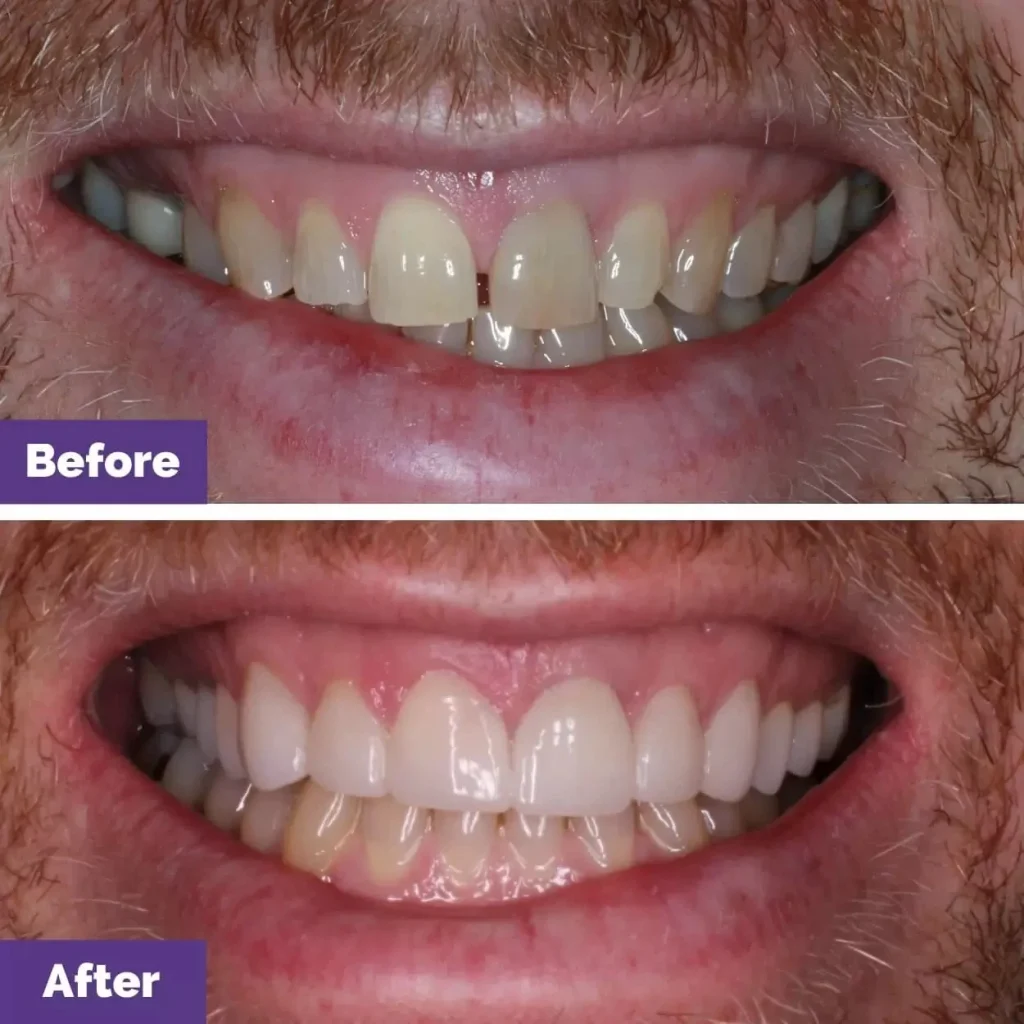
A small gap between the front teeth can usually be closed quickly. For many cases, in a single visit. The question is not just whether it can be done fast, but whether fast is the right answer for your case. Below is a clear breakdown of the three main ways to fix a small gap in your teeth in Melton, ranked by speed, with realistic timeframes and what each one is suited to.
Can a Small Gap Really Be Fixed in One Visit?
Yes, in most cases. A small gap between the front teeth (called a diastema in dentistry) is one of the most common cases that can be closed in a single appointment. The fastest option is composite bonding. Other options take longer but offer different long-term benefits. Which one is right depends on the size of the gap, the underlying cause, the shape of your teeth, and what you want from the result.
Option One: Composite Bonding
Speed: usually 1 to 2 hours, single visit.
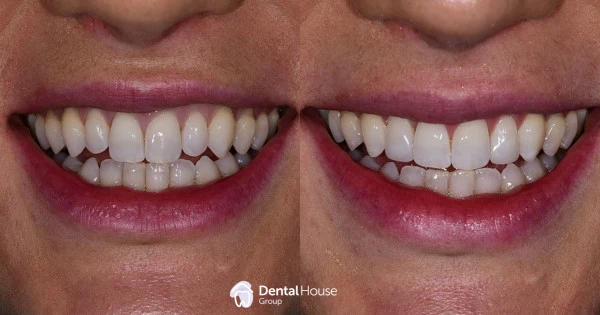
Composite bonding is the fastest way to close a small gap. The clinician applies tooth-coloured composite resin directly to the edges of the gap, builds it up in layers, shapes it by hand, cures it with a light, and polishes it to a natural finish. There is no drilling, no anaesthetic in most cases, and no impressions or lab work.
Longevity: 5 to 8 years with normal care, sometimes longer, before a touch-up is needed.
Pros: fastest option, conservative, often reversible, single visit, no drilling.
Cons: composite stains over time, can chip on hard food, and needs occasional touch-up. The aesthetic result depends heavily on the clinician’s skill in shade matching and shaping, not on the material.
Best for: small to medium gaps, when speed matters, and when the surrounding teeth are stable and well-aligned.
Option Two: Porcelain Veneers
Speed: typically 2 to 3 visits over 2 to 3 weeks. Some clinics with CEREC technology can mill ceramic veneers in a single visit, though most clinicians still prefer lab-made porcelain for front teeth where appearance is critical.
Veneers are thin shells of porcelain bonded to the front of the teeth. They are designed and made in a lab (or milled in-clinic via CEREC), then bonded into place at the final appointment. Most cases require some minimal preparation of the underlying tooth, which is a permanent change.
Longevity: typically 10 to 15 years or more with normal care. Porcelain is hard, resists stain better than composite, and holds its appearance over time.
Pros: longest-lasting cosmetic result, excellent stain resistance, very natural appearance when done well.
Cons: more expensive, requires some tooth preparation in most cases, and not reversible. Takes longer than bonding.
Best for: patients who want a longer-lasting result, who are comfortable with the time and cost, and whose case warrants the change.
Option Three: Orthodontics (Invisalign or Braces)
Speed: 3 to 12 months for a small gap, sometimes faster with Invisalign or clear aligners.
Orthodontic treatment closes the gap by physically moving the teeth together, rather than adding material to fill the space. It treats the underlying cause of the gap (the teeth being further apart than they should be) rather than masking it.
Longevity: permanent if retainers are worn afterwards. Without retainers, teeth can drift back over time.
Pros: addresses the root cause, no material added, no preparation of the tooth, and works for cases where bonding or veneers would not suit.
Cons: takes the longest, requires commitment to wearing aligners, and the result is only as stable as the retention afterwards.
Best for: patients who want the most stable long-term result, who do not mind a slower process, and where the gap is part of a broader alignment issue. Invisalign is also worth considering for patients whose surrounding teeth need to be moved alongside closing the gap.
When a Combination Is the Right Answer
Sometimes the right answer is two of these together. A short Invisalign phase to align the teeth and close most of the gap, followed by composite bonding to refine the final shape. This combination gives a more stable result than bonding alone, and a faster overall outcome than orthodontics on its own.
Whether this is the right approach depends on what your scans and photographs show at the consultation stage.
A Word on the Underlying Cause
Closing a gap with composite or veneers does not address why the gap was there in the first place. Sometimes a gap is purely down to tooth size or shape. Sometimes it is the result of a high lip frenulum (the small band of tissue connecting the lip to the gum), a missing or undersized neighbouring tooth, or a previous orthodontic treatment that has relapsed.
A consultation should examine the underlying cause, not just the cosmetic concern. Treating the symptom without understanding the cause can mean the gap reopens later.
How We Approach Gap Closure at Melton Dental House
Melton Dental House handles all three of the options above.
Composite bonding is handled by our upstairs general dentistry team, with clinical photography and a discussion about shape, shade and the result you are looking for, before any composite is applied.
Porcelain veneers are planned with photographs, models, and (in some cases) Digital Smile Design so you can see how the final result is designed to look before you commit.
Invisalign is also handled in-house. We will tell you honestly which option is right for your case, including when bonding is enough, when veneers are worth the additional time and cost, and when orthodontics is the better long-term answer.
Questions to Ask at Your Consultation
Take this short list to any consultation:
- What is causing the gap, not just how to close it?
- Which option do you recommend, and why?
- How long will each option take?
- What is the long-term outlook?
- Will I need retainers afterwards if the gap is closed orthodontically?
- What does maintenance look like for each option?
- What are the realistic risks and trade-offs?
Clear answers to those help you choose with your eyes open, not just chase the fastest fix.
Ready to Close the Gap?
If you have a small gap you want closed in Melton, the next step is a clinical consultation. Book your consultation with the team at Melton Dental House and we will examine your teeth properly, take photographs, and walk you through the realistic options for your case before any treatment is started.